
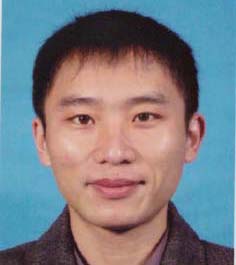
江峰
- 教授
- 博士生导师
- 硕士生导师
- 电子邮箱:
- 所在单位:材料科学与工程学院
- 学历:博士研究生毕业
- 办公地点:
- 性别:男
- 联系方式:
- 学位:博士
- 学科:材料科学与工程
- 学科:材料科学与工程
祝贺 吴亚科副教授关于爆炸焊接铜合金的论文在Journal of Materials Research and Technology 正式发表!
- 发布时间:2024-12-30
- 文章标题:祝贺 吴亚科副教授关于爆炸焊接铜合金的论文在Journal of Materials Research and Technology 正式发表!
- 内容:Parameter-determined interface morphologies and properties of explosively-welded Cu – Ni – Si – Cr alloy compositesYake Wu a , Rui Meng a , Xiaogang Wu a , Zhongyue Yang a , Bai Li b , Feng Jiang a , * , Junyong Lu b , **a State Key Laboratory for Mechanical Behavior of Materials, Xi’an Jiaotong University, Xi’an, 710049, Chinab National Key Laboratory of Electromagnetic Energy, Naval University of Engineering, Wuhan, 430033, ChinaABSTRACTSix Cu–Ni–Si–Cr alloy composites are prepared by explosive welding with the designed parameters. Wavyinterface containing the melted pockets and shrinkage cracks is always observed, refining the grains to justseveral micrometers with the localized deformation. Resultantly, the interface regions show higher hardness andyield strength than elsewhere, reaching HV 190 and over 400 MPa, respectively, but their plasticity is less thanhalf that of the base-plate parts. Theoretical analysis successfully relates the area of the total disrupted regionsincluding the interfacial molten and wavy zones in the composites linearly to the flyer-plate thickness (hf) andcollision angle (β) as ( hf sin2 2 β )2. For the composite fabricated at an impact velocity and angle of 310 m/s and8.0◦, respectively, strengthening mechanism calculation for its interface part reveals that grain boundary,dislocation and solid solution hardening are most effective and contribute 68 MPa, 370 MPa and 39 MPaindividually, making the dislocation hardening dominant for the enhanced strength.共同作者有海军工程大学的鲁军勇研究员、李白博士和多位研究生同学本项目受国家自然科学基金重大研究计划培育项目资助。