 校内登录
校内登录 陈瑶
陈瑶
性别:男
职称:副教授
博士生导师:是
硕士生导师:是
学历:博士研究生毕业
学位:博士
所在单位:仪器科学与技术学院
学科: 仪器科学与技术
招生学科 仪器科学与技术
本课题组聚焦片上超低场核磁共振(NMR)技术,致力于其微型化、便携化与低成本化。传统核磁共振系统体积庞大、成本高昂,严重限制了其广泛应用。我们通过利用量子测量的超高灵敏特性,探索在接近零磁场下微弱核自旋信号的高灵敏探测与噪声抑制,旨在突破现有技术瓶颈,实现手性分子的精密识别与检测。
我们的研究内容涵盖:
通过深入研究MEMS技术、电路设计以及量子精密测量等交叉领域,我们旨在推动新一代超低场NMR谱仪在前沿应用与规模化推广,为生命科学、材料科学等领域提供革新性工具。
期待致力于突破前沿物理与工程界限的硕士生和博士生加入,共同将实验室成果推向实际应用!
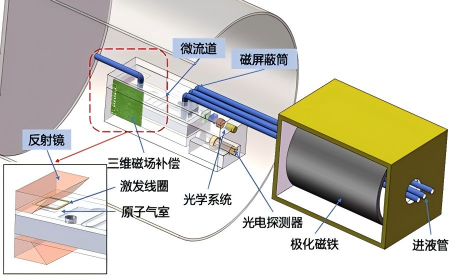
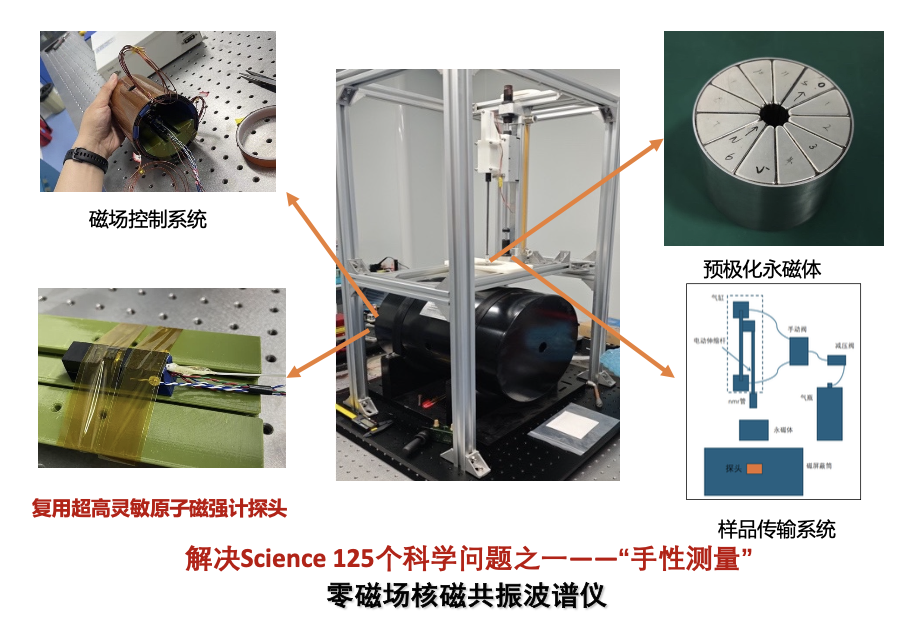
Our group focuses on on-chip ultra-low-field nuclear magnetic resonance (NMR) technology, aiming for its miniaturization, portability, and cost-effectiveness. Traditional NMR systems are bulky and expensive, significantly limiting their widespread application. By leveraging the ultra-high sensitivity of quantum measurement, we investigate highly sensitive detection of weak nuclear spin signals and noise suppression near zero magnetic fields. Our goal is to overcome existing technical bottlenecks and achieve precise identification and detection of chiral molecules.
Our research areas include:
Through in-depth research at the intersection of MEMS technology, circuit design, and quantum precision measurement, we aim to advance the frontier applications and large-scale deployment of next-generation ultra-low-field NMR spectrometers, providing revolutionary tools for life sciences, materials science, and other fields.
We welcome master's and Ph.D. students who are passionate about pushing the boundaries of physics and engineering to join our team and translate laboratory breakthroughs into real-world applications!
本课题组致力于开发应用于医疗领域的量子传感芯片,尤其在脑磁探测方向深耕细作。量子传感器凭借原子、分子、电子、光子等微观粒子的超高灵敏特性,能够对磁场等物理量进行极其精密的测量。为了突破传统量子传感器体积庞大的限制,我们专注于将微光机电系统(MEMS)技术与量子传感技术深度融合,旨在研制高性能、小型化的量子传感芯片,从而极大拓展其在医疗健康领域的应用。
芯片原子磁强计与核心敏感元件制备
我们以芯片原子磁强计为核心,利用原子自旋对磁场的敏感特性,实现fT(飞特斯拉)量级的超高灵敏磁场测量。这使得我们能够对人脑产生的微弱磁场进行精准成像,为阿尔茨海默症的早期诊断、抑郁症及癫痫术前病灶定位、以及未来脑机接口等前沿应用提供强有力的新型工具。通过芯片化技术,我们有望显著缩小现有传感器的体积,提升脑磁等极弱磁信号的空间分辨率,并大幅降低传感器的成本。
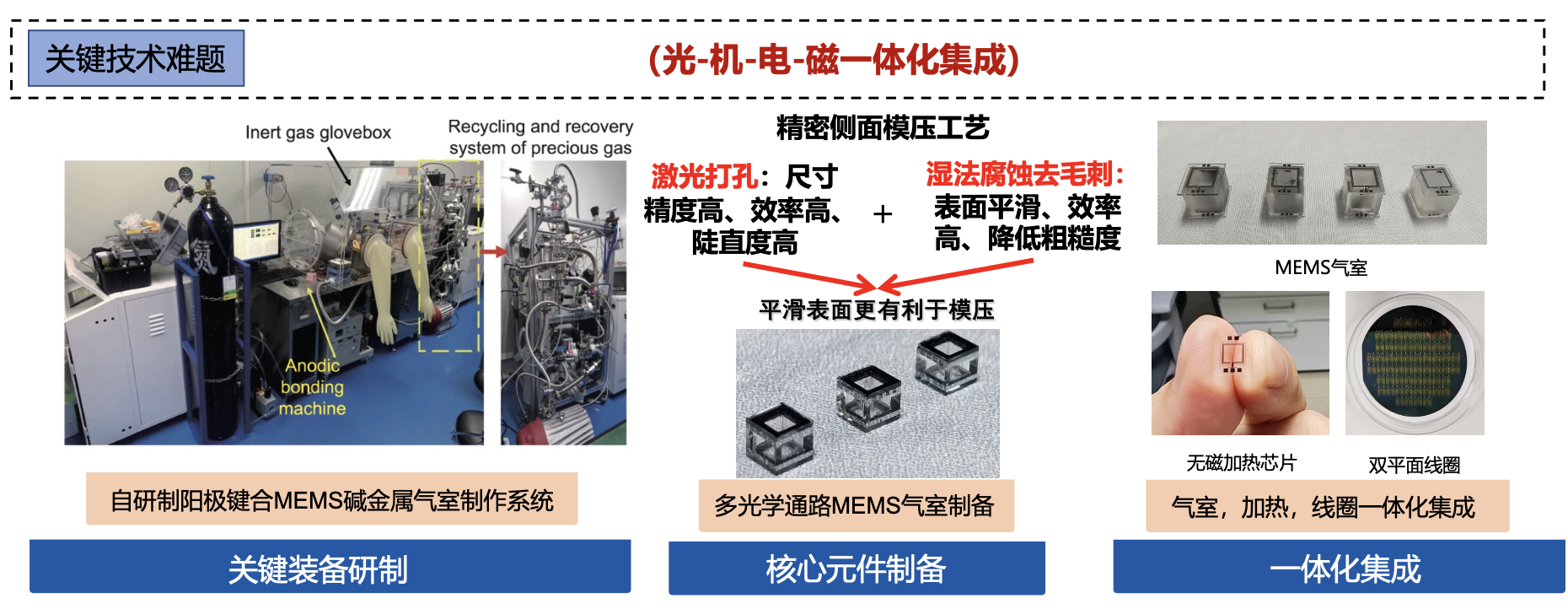
本研究的核心优势在于对核心敏感元件的自主制备与集成。我们重点攻克包括:
通过这些关键元器件的精细加工与高度集成,我们能够构建出小型化、便携式的脑磁影像设备。相较于脑电信号,脑磁信号能够无畸变地穿透颅骨,从而探测到脑深部的精微活动,这对于癫痫病灶的准确识别具有里程碑式的意义。本研究将聚焦于从传感器核心敏感元件制备到整个脑磁系统搭建的全链条研发,研制具有广阔市场前景的新一代脑磁影像设备。该研究得到了西安交通大学医工交叉产教融合平台的有力支持,为项目的深入开展提供了坚实保障。
欢迎仪器、电子、微纳加工、光学工程、生物医学工程等相关专业的优秀硕士生、博士生加入我们的团队,共同攻克脑磁探测领域的国际前沿难题,为人类健康事业贡献力量!
On-chip Quantum Sensors for Medical Applications: Magnetoencephalography (MEG)
Our research group is dedicated to developing quantum sensing chips for medical applications, with a particular focus on Magnetoencephalography (MEG). Quantum sensors leverage the ultra-high sensitivity of microscopic entities such as atoms, molecules, electrons, and photons to precisely measure physical quantities like magnetic fields. To overcome the size limitations of conventional quantum sensors, we concentrate on integrating Micro-Electro-Mechanical Systems (MEMS) technology with quantum sensing, aiming to develop high-performance, miniaturized quantum sensing chips that significantly expand their applications in healthcare.
Chip-scale Atomic Magnetometers and Core Sensing Element Fabrication
At the core of our work is the chip-scale atomic magnetometer, which utilizes the magnetic field sensitivity of atomic spins to achieve ultra-high precision measurements in the femtotesla (fT) range. This enables us to accurately image the faint magnetic fields generated by the human brain, offering a powerful new tool for early diagnosis of Alzheimer's disease, preoperative localization for depression and epilepsy, and future brain-computer interfaces. Through chip-level integration, we expect to substantially reduce the size of existing sensors, enhance the spatial resolution of extremely weak magnetic fields like brain magnetism, and significantly lower sensor costs.
Our research's key strength lies in the independent fabrication and integration of core sensitive components. We are addressing critical challenges, including:
Through the meticulous fabrication and high-level integration of these key components, we aim to construct miniaturized and portable MEG devices. Unlike electroencephalography (EEG) signals, MEG signals can penetrate the skull without distortion, allowing for the detection of subtle activities deep within the brain. This holds monumental significance for accurately identifying epileptic foci. This research focuses on the full spectrum of R&D, from the preparation of core sensitive components to the construction of the entire MEG system, aiming to develop a new generation of MEG imaging equipment with broad market prospects. This study is robustly supported by Xi'an Jiaotong University's Medical-Engineering Cross-Disciplinary Industry-Education Integration Platform, providing a solid guarantee for the project's in-depth development.
We welcome outstanding Master's and Ph.D. students from instrument science, electronics, micro/nano fabrication, optical engineering, biomedical engineering, and related fields to join our team. Together, let's tackle international frontier challenges in brain magnetic detection and contribute to human health!
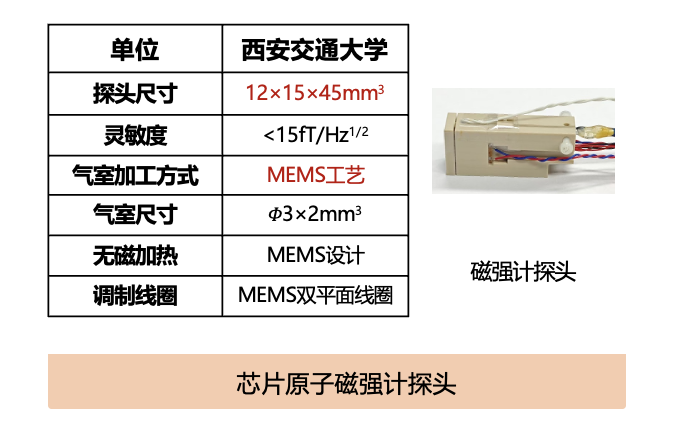
在人体运动状态下进行脑磁测量,是脑科学和神经工程领域的一项重大挑战,也是我们课题组的特色研究方向。本研究获得了国家自然科学基金面向项目支持,旨在突破运动伪影对脑磁信号的干扰,实现更真实、更自然状态下的人脑功能探测。
传统的脑磁测量(MEG)系统通常要求受试者保持静止,以避免运动造成的强大背景干扰磁场。而脑磁信号本身仅有约100 fT的微弱强度。即使在磁屏蔽房内,经过补偿后的残余磁场可控制在1 nT以内,但人体运动引起的磁场变化仍然远超这一范围,严重掩盖了脑部自身的微弱神经磁信号。
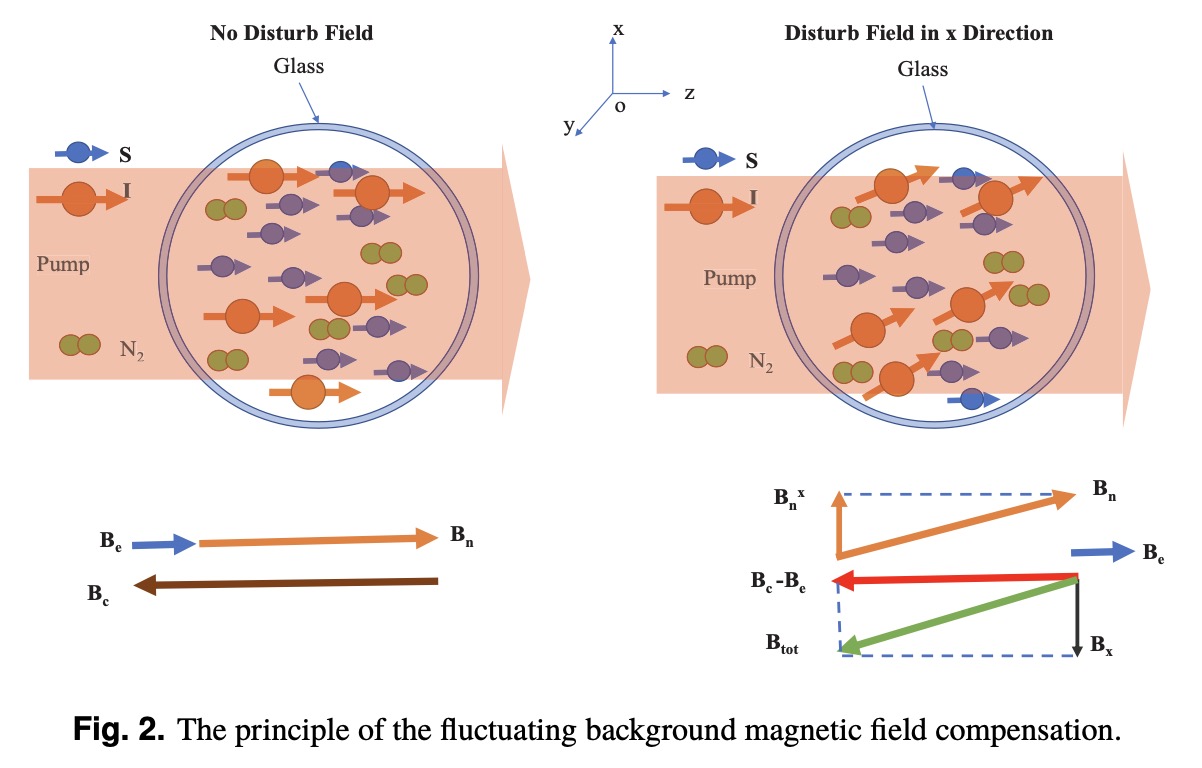
针对这一核心难题,我们课题组创新性地提出并正在开发基于核自旋的干扰磁场主动补偿技术。我们利用超极化的核自旋对磁场的超高灵敏度和可操控性,构建一个能够实时感知并抵消运动造成背景磁场变化的补偿系统。这意味着,我们将能够:
Measuring brain magnetism during human motion presents significant challenges in the fields of brain science and neural engineering, and it is a distinctive research direction of our group. This research is supported by the National Natural Science Foundation of China (NSFC) for Key Programs, aiming to overcome motion artifact interference with brain magnetic signals and achieve brain functional detection in more realistic and natural states.
Conventional magnetoencephalography (MEG) systems typically require subjects to remain still to avoid strong background interference magnetic fields caused by movement. Brain magnetic signals themselves are extremely weak, approximately 100 fT. Even within a magnetically shielded room, residual magnetic fields can be compensated to within 1 nT; however, magnetic field changes induced by human motion still far exceed this range, severely masking the brain's own subtle neural magnetic signals.
To address this core challenge, our research group has innovatively proposed and is developing an active compensation technology for interference magnetic fields based on nuclear spin. By leveraging the ultra-high sensitivity and controllability of hyperpolarized nuclear spins to magnetic fields, we are constructing a compensation system capable of real-time sensing and canceling background magnetic field changes caused by motion. This initiative will enable us to:
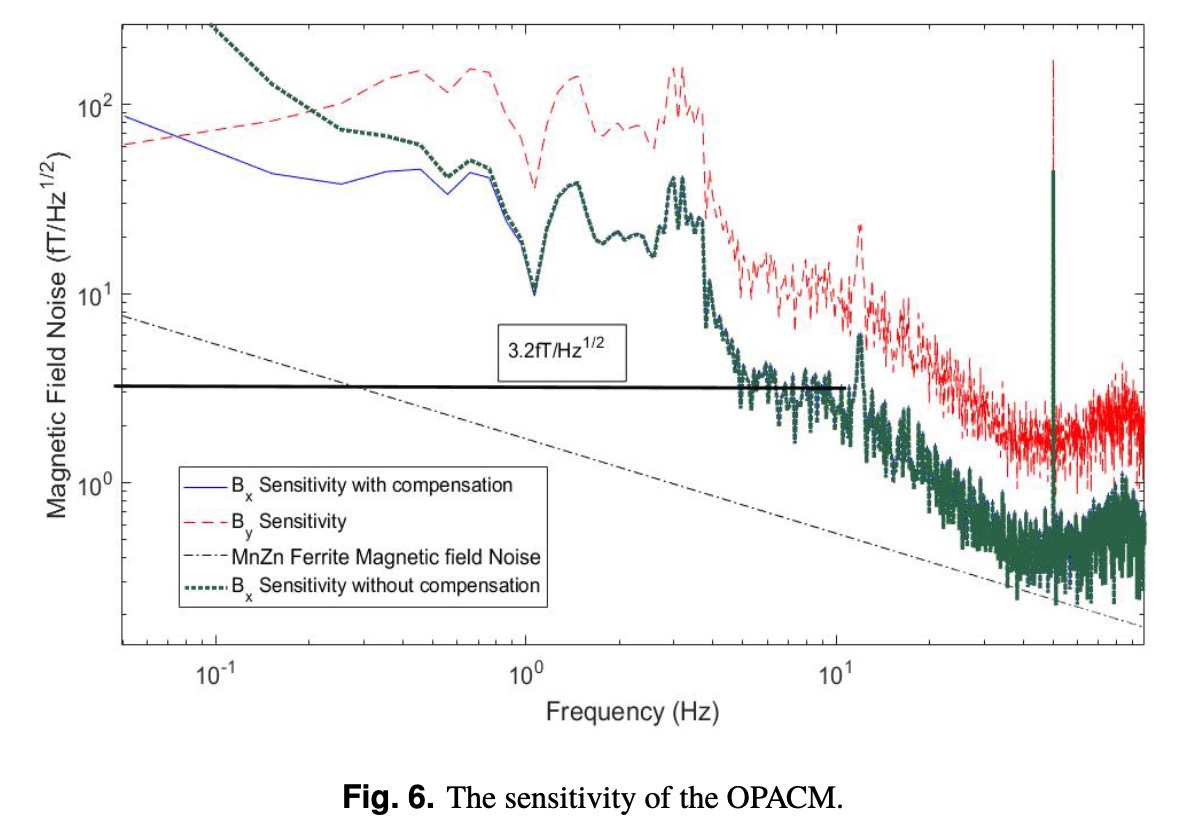
利用此磁强计,实现了灵敏度为3.2fT/Hz^(1/2) 的灵敏度。3.2fT/Hz^(1/2) magnetic field sensitivity has been achieved.
本课题组与国家电网深度合作,专注于超特高压电网量子电流传感器的研发,以满足新能源产业发展背景下,电力系统对高精度、全光学电流传感的迫切需求。我们致力于开发服务于未来智能电网智能调度的量子电流传感器,实现对电网大电流的精准监测。
当前,我们利用去多普勒饱和吸收谱技术进行相关测量,这是一种创新的全光学测量方案。通过将原子吸收谱线频率转化为磁场测量,我们能够实现对电网电流的非接触、高精度测量。这种方法避免了传统互感器的弊端,具有高绝缘、抗干扰等显著优势,特别适用于复杂的超特高压电网环境。
研究内容涵盖:
本项目在量子物理、原子光谱、光学工程、电路设计以及电力系统应用等多个学科领域交叉融合,具有显著的原始创新性。特别是将原子吸收谱线频率转化为磁场测量,进而实现全光学的电网电流测量,为电力行业提供了新的的解决方案。加入我们的团队,您将有机会:
期待对量子技术、能源电力充满热情的硕士生和博士生加入,共同开创智能电网新时代!
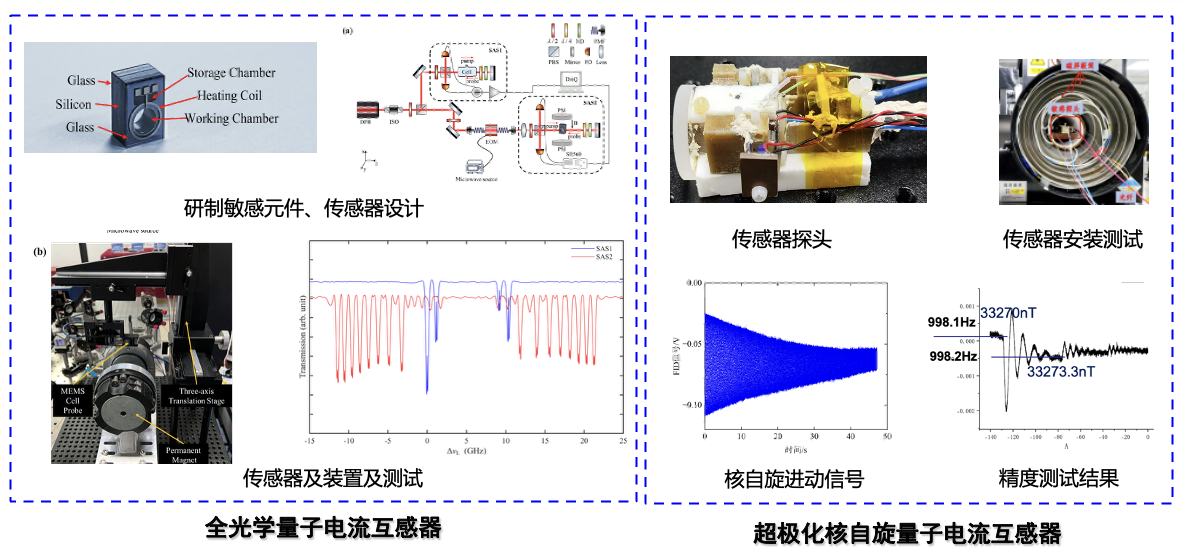
In close collaboration with the State Grid Corporation of China, our group is dedicated to the research and development of quantum current sensors for ultra-high voltage power grids. This initiative addresses the urgent need for high-precision, all-optical current sensing in power systems, driven by the rapid growth of the new energy industry. Our goal is to develop quantum current sensors that enable precise monitoring of large currents in power grids, supporting the intelligent dispatching requirements of future smart grids.
Currently, we employ Doppler-free saturated absorption spectroscopy for measurements, representing an innovative all-optical sensing approach. By converting atomic absorption line frequencies into magnetic field measurements, we achieve non-contact, high-precision measurement of grid currents. This method overcomes the limitations of traditional current transformers, offering significant advantages such as high insulation, strong anti-interference capabilities, and a wide dynamic range, making it particularly suitable for complex ultra-high voltage power grid environments.
Our research areas include:
This project demonstrates significant original innovation through the interdisciplinary integration of quantum physics, atomic spectroscopy, optical engineering, circuit design, and power system applications. Specifically, converting atomic absorption line frequencies into magnetic field measurements to realize all-optical power grid current measurement provides an unprecedented solution for the power industry. Joining our team offers the opportunity to:
We welcome master's and Ph.D. students passionate about quantum technology and power energy to join us in pioneering a new era of smart grids!
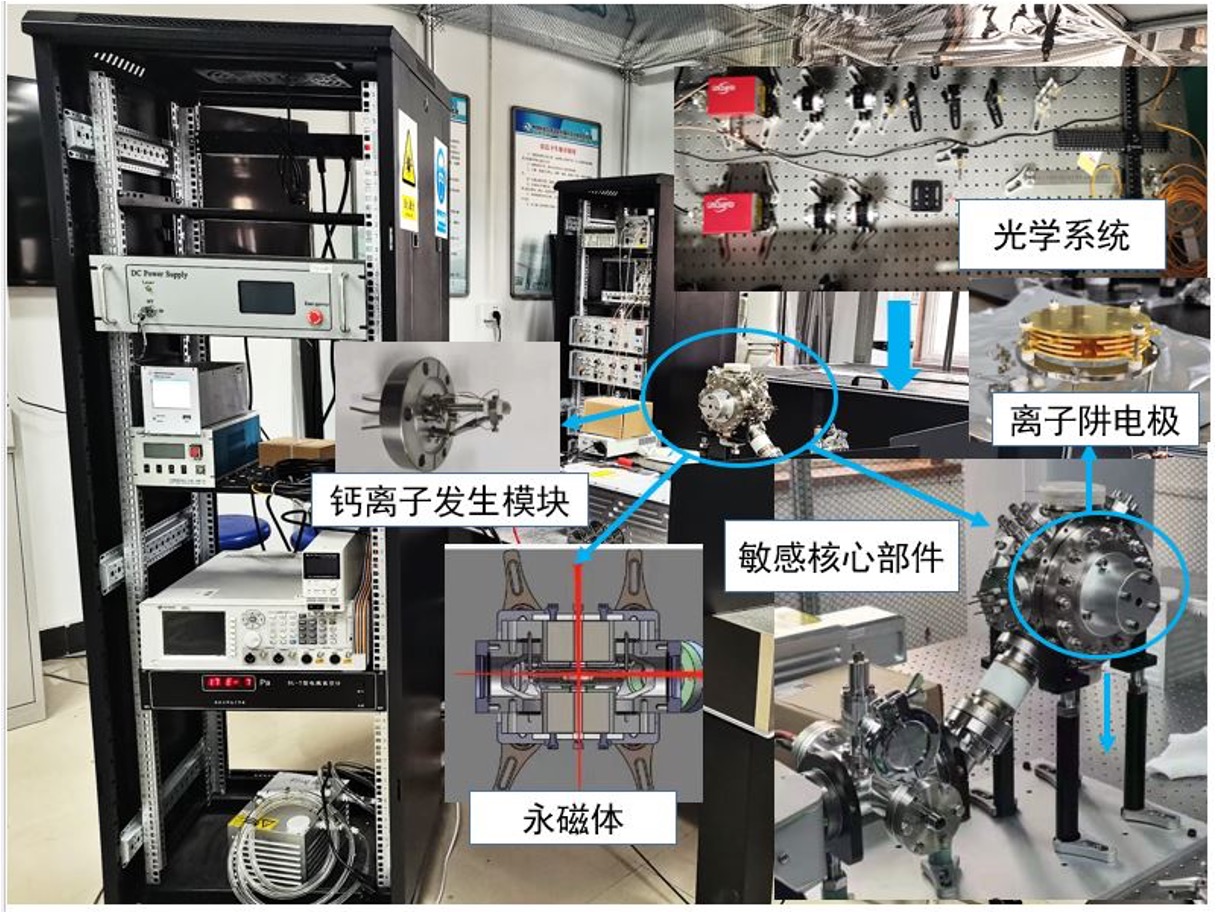
本课题组致力于芯片上的Penning离子阱技术研究,主要目标是为未来量子计算构建高性能的物理平台。我们已初步搭建了相关实验平台,并在此基础上,将Penning离子阱应用于量子精密测量。
Penning离子阱通过精密的电磁场将离子囚禁,使其在二维平面内形成离子晶体。这些离子晶体构成了独特的量子机械振子和转子系统,其能级是量子化的。利用这种二维量子谐振子,我们能够实现对极微弱力的测量,极限灵敏度有望达到 10E(−24)N。
加入我们,你将有机会:
我们热忱欢迎对量子计算、芯片级量子器件、量子精密测量以及电磁场理论感兴趣的硕士生和博士生加入,共同探索量子世界的前沿!
Our group is dedicated to research on on-chip Penning ion trap technology, with the primary goal of building high-performance physical platforms for future quantum computing. We have already established the relevant experimental platform, and on this basis, we apply Penning ion traps to quantum precision measurement.
Penning ion traps confine ions through precise electromagnetic fields, causing them to form ion crystals in a two-dimensional plane. These ion crystals constitute unique quantum mechanical oscillator and rotor systems with quantized energy levels. Utilizing these two-dimensional quantum harmonic oscillators, we can achieve measurements of extremely weak forces, with a projected sensitivity limit of 10E(−24) N.
Join us, and you will have the opportunity to:
We warmly welcome master's and doctoral students interested in quantum computing, chip-scale quantum devices, quantum precision measurement, and electromagnetic field theory to join us in exploring the frontiers of the quantum world!
参考文献:Chen Y, Zhao L, Jiang Z. Rotation sensing with a compact Penning trapped calcium ion crystal system[J]. Bulletin of the American Physical Society, 2022. 链接
实验平台图:


QQ答疑群

微信公众号
版权所有:西安交通大学 陕ICP备05001571号