




Research Interests
1) Experiment and kinetic research on char combustion and PM formation;
2) Biomass ash related problems during combustion (slagging, agglomeration, corrosion, and utilization...) with experiment and modeling;
3) Biomass pretreatment, combustion, co-combustion, gasification…;
4) Low NOx Burner and Emission Control of Combustion (NOx, SOx, and PM);
5) Resource Utilization of Fly ash.
Detailed self-introduction
I mainly focus on the studies of ash behaviors and pollutant control during the combustion of solid fuels such as coal and biomass. More detailed, it consists of the multiple slagging mechanisms during combustion of alkali-enriched fuels, ash behaviors coupled char particle combustion and the formation of multi-mode particulate matters (PM), the mechanisms and technologies of pulverized coal low-NOx combustion through self-heated. Planning to through the above-mentioned in-depth research, exploring their scientific essence, and then achieving the clean and efficient combustion of solid fuel, meanwhile, solving the thorny problems of ash slagging, PM fromation, NOx emission during combustion, etc.
Focusing on the vital ash-related issues during the combustion of alkali-enrichment fuels, I propose the concept of “triple slagging mechanisms, i.e., alkali-induced slagging, high-temperature silicates melt-induced slagging, and low-temperature silicates melt-induced slagging” by means of systematical and in-depth research (Fig.1), meanwhile, elucidates the forming mechanisms and develops the quantitative evaluation criteria and methods. All those provide theoretical guidelines for fuel selection, mix, match and slagging prediction. Attributed to above research, an invited review on ash-related issues during biomass combustion was launched on the pre-eminent journal “Progress in Energy and Combustion Science” (Invited, annual paper number:17,IF 35.339,cited: 600+,ESI hot point paper, and ESI highly cited paper since its publication in 2016). Meanwhile, I was awarded the Most Cited Energy Article from China by Elsevier.
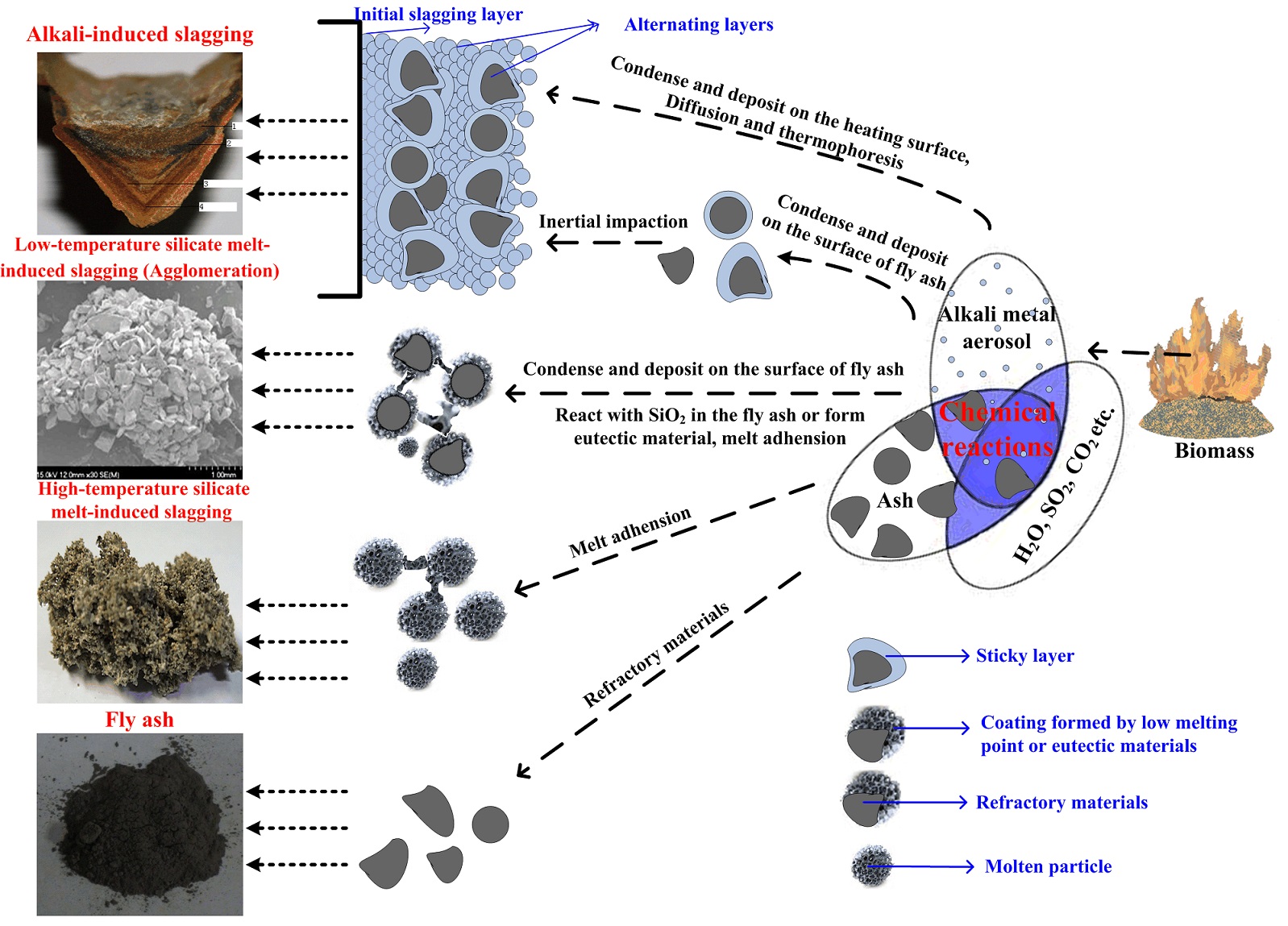
Fig.1 The formation and coexistence mechanism of triple slagging during biomass combustion
Aiming to the multiple ash behaviors during pulverized coal char combustion, by means of laser-optics testing, I develops the only ash inhibition char burning intrinsic kinetics model and codes (CBC, Left illustration in Fig.2) that couples of ash film, ash dilution and ash vaporization and accurately characterizes the impact of ash on overall char particle mass loss rates during combustion and gasification; The CBC kinetics model is the unique ash model that accurately characterizes the impact of ash on overall char particle mass loss rates. Recently, the model has been extended to simulate the formation of ultrafine PM during pulverized coal char combustion after coupling the mechanism of ash vaporization, homogenous nucleation, heterogeneous condensation, coagulation and coalescence, named as Char Burning and Particulate Matter Kinetics Model (CBPMK, Right illustration in Fig.2). The model of CBPMK can give high precision prediction on the dynamic behaviors of char combustion and PM formation. As a more sophisticated model, the model is the only one that has the capability of accurately characterizing the impact of ash on overall char particle mass loss rates, and thus providing more realistic and may better explain late-stage burnout data.
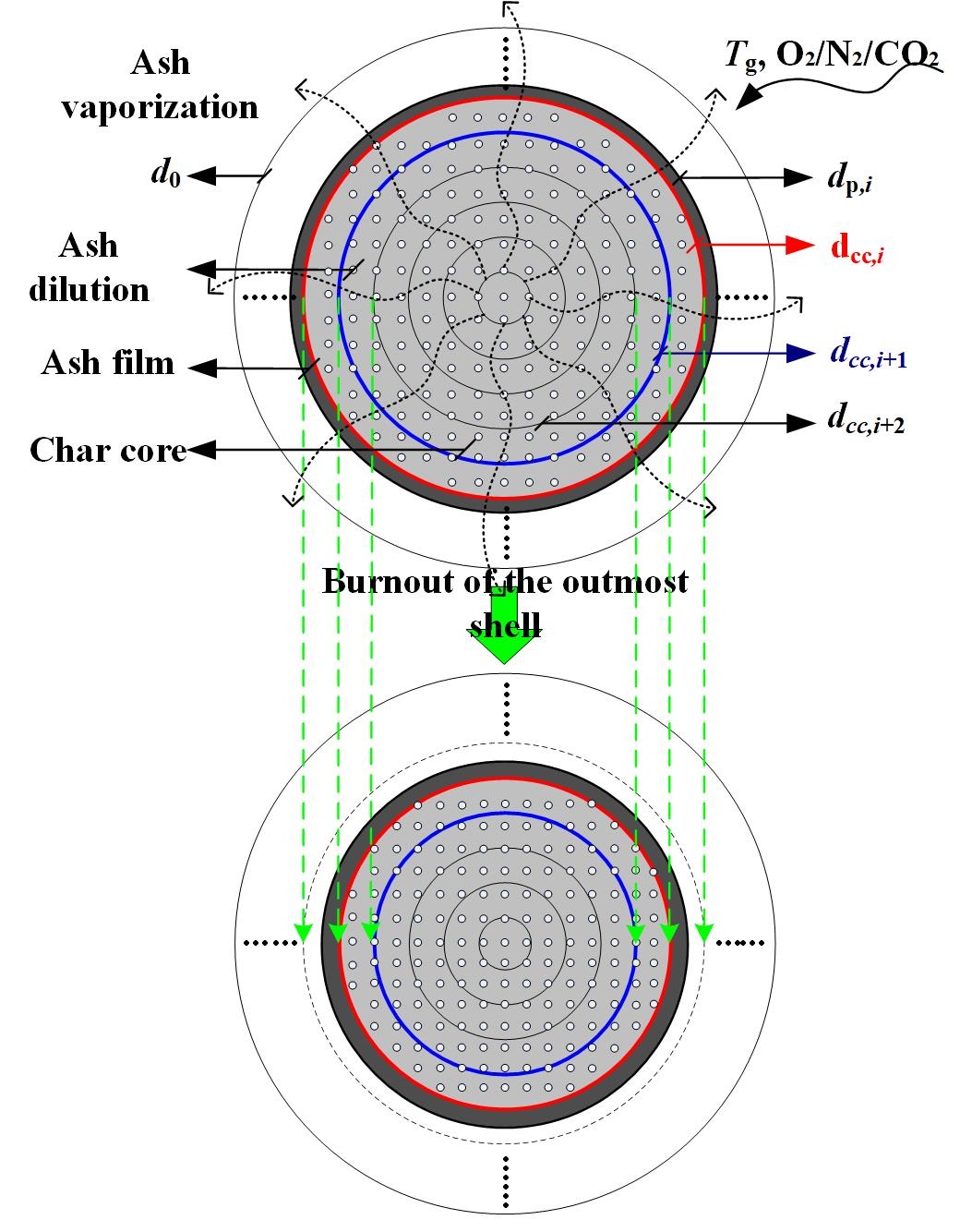
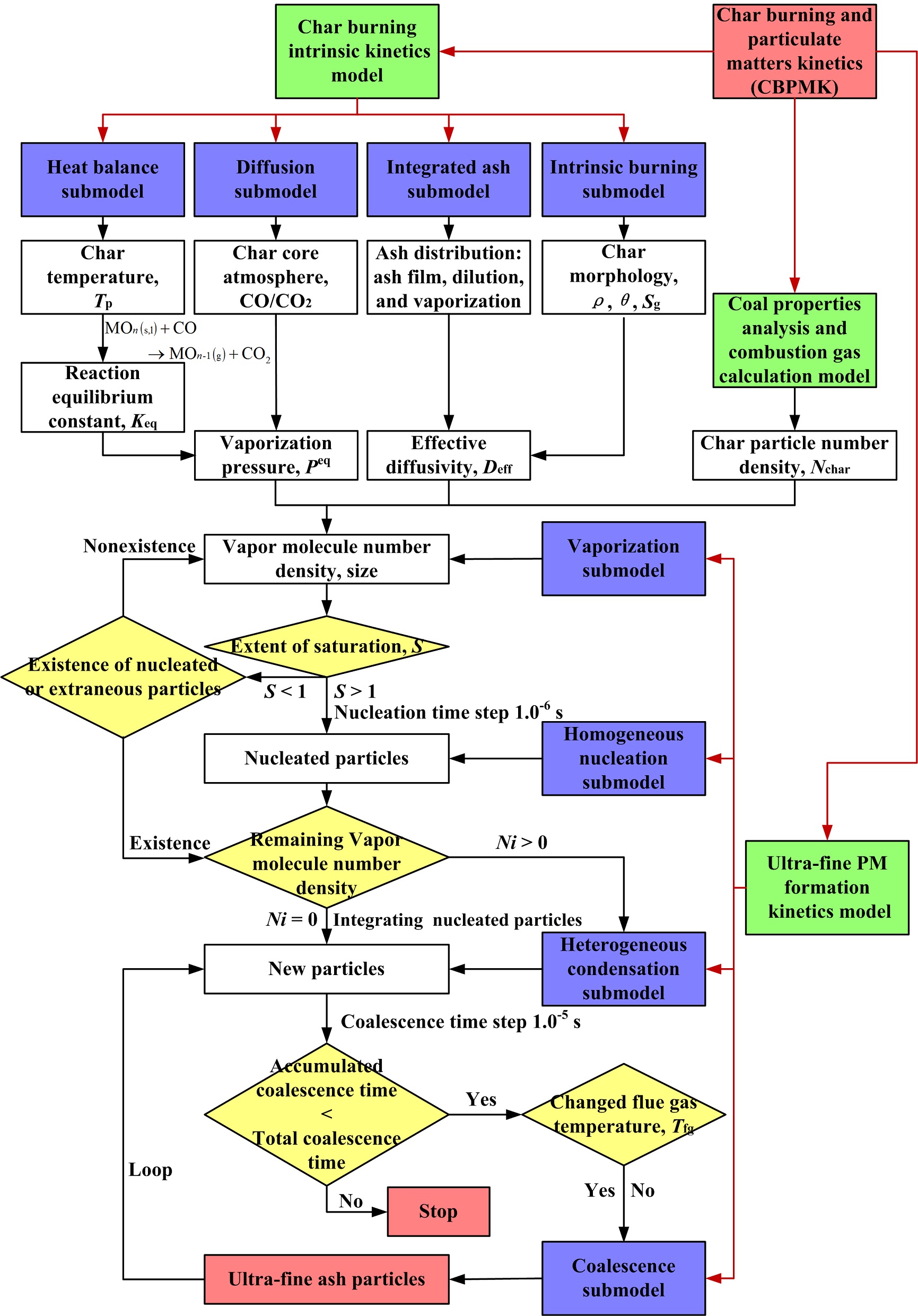
Fig.2 Char Burning model CBC and the framework of ultrafine PM formation model CBPMK
Focusing on the urgent requirement on the further removal on NOx and the low load stable-combustion in coal power plants and industrial boilers, I conducted detailed research on the NOx formation by a novel pulverized coal preheating-combustion coupling technology, invents the multistage air/fuel supply technology in radial and axial, self-preheating & low nitrogen combustion technology, and combustion system integration scheme of self-preheating burner and boiler furnace, meanwhile, exploits series of low-NOx swirling burners (Fig.3). The self-preheating burner improves the low NOx combustion with a value as low as 130 mg·m-3 in industrial boilers, meanwhile, it can ensure the safety operation of boiler at the load as low as 20%. So far, the burners have been applied more than 100 (covering 4.2-35 MW), and installed in 80 boilers and more than 40 users in China and Pakistan. Twelve inventive patents and nine utility model patents are authorized, and five patents are transformed by enterprise application. This study provides theoretical basis and application reference for the ultra-low NOx emission and low load flexibility modification of coal-fired boilers. The appraisal committee, organized by the Chinese Society of Power Engineering, agreed that the technology was generally at the “International advanced level”, among that the multistage air/fuel supply technology in radial and axial, pulverized coal self-preheating, and self-cleaning and slagging prevention technology of pre-combustion chamber were “International leading level”. Meanwhile, I was awarded the Science Research Famous Achievement First-Level Award in Higher Institution of Shaanxi in 2021.
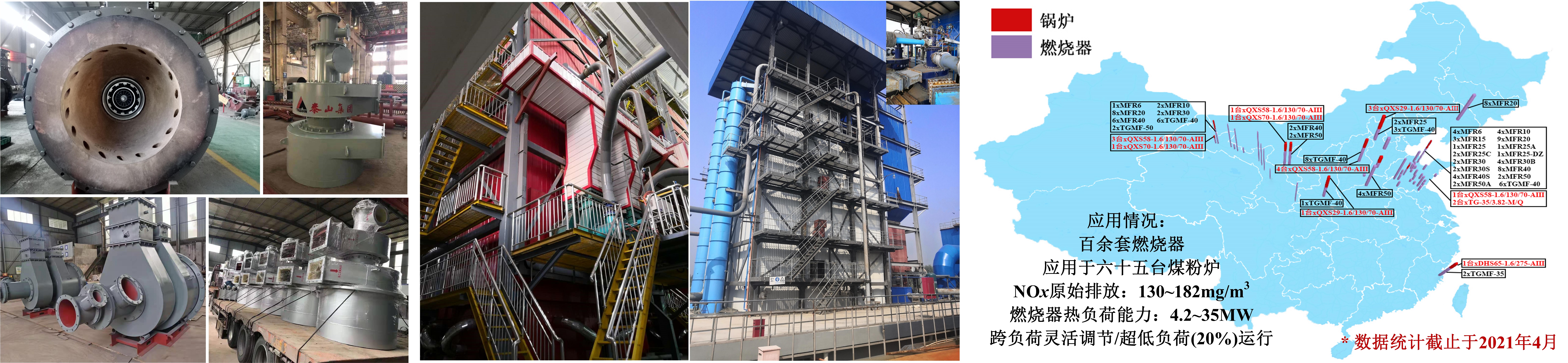
Fig.3 The low-NOx self-preheating burner
Now, I has chaired two NSFC proposal, five proposals from Natural Science Basic Research Plan in Shaanxi Province and national and provincial key laboratories, one special financial grant from China Postdoctoral Science Foundation, five Fundamental Research Funds for the Central Universities, and more than ten of enterprise projects, etc. I have gained the Outstanding Young Talents in Shaanxi, the Science Research Famous Achievement First-Level Award in Higher Institution of Shaanxi, the award of most cited energy article from Elsevier (Energy connect-China), 100 Selected Chinese Postdoctoral Scholars from China Postdoctoral Science Foundation, Young Talents Support Plan from Xi'an Association for Science and Technology, Young Talent Tracking Support Plan and Outstanding Doctoral Dissertations from Xi'an Jiaotong University, and Young Scholar of Distinction Award for PhD candidate from the MOE of China, etc.
Up to now, I has published more than 140 papers (> 110 journal articles and >30 conference paper and report), including more than 70 SCI papers (first and corresponding author: more than 50; H-index: 21). Among that, 10 papers were published in the official journal of the Combustion Institute (one in the journal of Progress in Energy and Combustion Science, 4 in Proceedings of the Combustion Institute, 6 in Combustion and Flame) and one in journal of Renewable and Sustainable Energy Reviews. The invited article published in the journal of Progress in Energy and Combustion Science has been cited more than 700 in Google, ranked as ESI hot paper (top 1‰), and awarded the Most Cited Energy Article from China (Elsevier Energy in China, total 28 papers). All the SCI papers have been cited by famous scholars including academicians, CI fellows, and editors in SCI journals for more than 2000 in Google. I have been authorized 30 inventive patents and ten utility model patents, among that six patents transformed by enterprise application. Meanwhile, I have done oral presentation more than twenty times in international conferences (such as the international symposium on combustion and ICAE) and local annual meeting of combustion. He also ever serviced as an Editor of journal of Current Chinese Science (Field: Energy) , and associate editor of the journal of IET Renew Power Gen(IF 3.034), and Front Energy Res (IF 3.858), an editor member of the internal journal of chemical engineering (IF2.257), guest editor of Journal of chemistry (IF 2.506),Sustainability (IF 3.889), Energies (IF 3.252), session chair in the International Conference of Power Engineering 2013 and International Conference on Applied Energy 2017, and a member of technical program committee of International Conference on Environmental Protection and Human Health 2016. He is a peer reviewer on more than thirty SCI journals such as Progress in Energy and Combustion Science, Renewable and Sustainable Energy Reviews, Proceedings of the Combustion Institute, Combustion and Flame, Combustion Science and Technology, Applied Energy, and Fuel, as well as NSF of China and Poland