



范修军
 Basic information
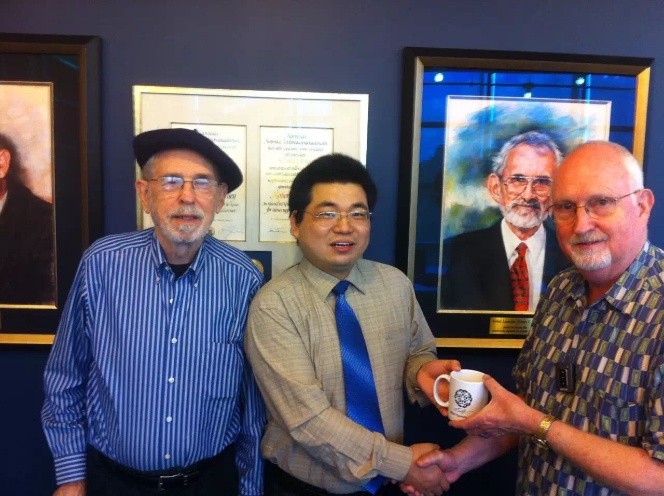
Basic Information:
Professor Fan, born in Ezhou, Hubei, Engineering Doctor, doctoral supervisor and faculty member at the School of Chemistry, Xi'an Jiaotong University. Selected into the University's Class A Young Top-notch Talent Program. Received a doctoral degree in Microelectronics and Solid State Electronics from Beijing University of Technology.
Honorary title:
Selected for the "Sanqin Talent Introduction Program" (Qin Chuangyuan Young Talent), the "Young Talents with Outstanding Innovation Ability" program of Shanxi Provincial Higher Education Institutions, and the "Sanjin Talent" support program for young outstanding talents in Shanxi Province. Member of the Solid State Ionics Division of the Chinese Ceramic Society, Young Editor of "Journal of Fuel Chemistry". National expert for monitoring and evaluation of postgraduate education.
Research Field:
1. Applications of Nano-Functional Materials in the Energy Field
In recent years, our research group has focused on the design, controlled transformation, and structure-property relationship studies of inorganic nano-energy materials. We have accumulated significant research experience in the synthesis and controlled transformation of inorganic-organic hybrids, as well as in electrocatalytic energy storage and conversion.
Our primary research areas include:
a. Utilizing chemical vapor deposition (CVD) as a means to regulate the morphology, electronic structure, and surface interfaces of catalytic materials, and exploring the application of inorganic nano-energy materials in the catalytic activation of small molecules (such as O₂, N₂, H₂, H₂O, CO₂, etc.);
b. Controlled synthesis of two-dimensional nanoporous materials and their applications in energy electrochemistry, including proton exchange membrane fuel cells, air batteries, electrochemical hydrogen evolution, oxygen evolution reactions, oxygen reduction reactions, and electrocatalytic carbon dioxide reduction;
c. The design and synthesis of metal-organic frameworks (MOFs) and their research in the field of nano-energy;
2. Energy Electrocatalytic Materials and Devices
This primarily involves carbon-based nanocatalysts, key catalytic materials and devices for hydrogen-oxygen fuel cells, as well as the production of hydrogen peroxide (H₂O₂) under high current densities.
